Showing posts with label germany. Show all posts

3.4.12

University of Bonn


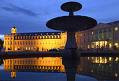
The University of Bonn (German: Rheinische Friedrich-Wilhelms-Universität Bonn) is a public research university located in Bonn, Germany. Founded in its present form in 1818, as the linear successor of earlier academic institutions, the University of Bonn is today one of the leading universities in Germany. The University of Bonn offers a large number of undergraduate and graduate programs in a range of subjects. Its library holds more than two million volumes. The University of Bonn has 525 professors and 27,800 students. Among its notable alumni and faculty are seven Nobel Laureates, two Fields Medalists, twelve Gottfried Wilhelm Leibniz Prize winners, Pope Benedict XVI, Heinrich Heine, Friedrich Nietzsche and Joseph Schumpeter.


History

The university's forerunner was the Kurkölnische Akademie Bonn (English: Academy of the Prince-elector of Cologne) which was founded in 1777 by Maximilian Frederick of Königsegg-Rothenfels, the prince-elector of Cologne. In the spirit of the Enlightenment the new academy was nonsectarian. The academy had schools for theology, law, pharmacy and general studies. In 1784 Emperor Joseph II granted the academy the right to award academic degrees (Licentiat and Ph.D.), turning the academy into a university. The academy was closed in 1798 after the left bank of the Rhine was occupied by France during the French Revolutionary Wars.

The Rhineland became a part of Prussia in 1815 as a result of the Congress of Vienna. Shortly after the seizure of the Rhineland, on April 5, 1815, the Prussian king Friedrich Wilhelm III promised the establishment of a new university in the new Rhine province (German: den aus Landesväterlicher Fürsorge für ihr Bestes gefaßten Entschluß, in Unsern Rheinlanden eine Universität zu errichten). At this time there was no university in the Rhineland, as all three universities that existed until the end of the 18th century were closed as a result of the French occupation. The Kurkölnische Akademie Bonn was one of these three universities. The other two were the Roman Catholic University of Cologne and the Protestant University of Duisburg.

The new Rhein University (German: Rhein-Universität) was then founded on October 18, 1818, by the Prussian king Frederick William III. It was the sixth Prussian University, founded after the universities in Greifswald, Berlin, Königsberg, Halle and Breslau. The new university was equally shared between the two Christian denominations. This was one of the reasons why Bonn, with its tradition of a nonsectarian university, was chosen over Cologne and Duisburg. Apart from a school of Roman Catholic theology and a school of Protestant theology, the university had schools for medicine, law and philosophy. Inititally 35 professors and eight adjunct professors were teaching in Bonn.

The university constitution was adopted in 1827. In the spirit of Wilhelm von Humboldt the constitution emphasized the autonomy of the university and the unity of teaching and research. Similar to the University of Berlin, which was founded in 1810, the new constitution made the University of Bonn a modern research university.

During the second World War the university suffered heavy damage. An air raid on October 18, 1944 destroyed the main building. The university was re-opened on November 17, 1945 as one of the first in the British occupation zone. The first university president was Heinrich Matthias Konen, who was expelled from the university in 1934 because of his opposition to Nazism. At the start of the first semester on November 17, 1945 the university had more than 10,000 applicants for only 2,500 places.

The university greatly expanded in the postwar period, in particular in the 1960s and 1970s. Significant events of the postwar era were the relocation of the university hospital from the city center to the Venusberg in 1949, the opening of the new university library in 1960 and the opening of a new building, the Juridicum, for the School of Law and Economics in 1967.

In 1980 the Pedagogigal University Bonn was merged into the University of Bonn, although eventually all the teachers education programs were closed in 2007. In 1983 the new science library was opened. In 1989 Wolfgang Paul was awarded the Nobel Prize in Physics. Three years later Reinhard Selten was awarded the Nobel Prize in Economics. The decision of the German government to move the capital from Bonn to Berlin after the reunification in 1991 resulted in generous compensation for the city of Bonn. The compensation package included three new research institutes affiliated or closely collaborating with the university, thus significantly enhancing the research profile of the University of Bonn.

Studies

School of Catholic Theology (German: 'Katholisch-Theologische Fakultät')
School of Protestant Theology (German: 'Evangelisch-Theologische Fakultät')
School of Law and Economics (German: 'Rechts- und Staatswissenschaftliche Fakultät')
School of Medicine (German: 'Medizinische Fakultät')
School of Humanities (German: 'Philosophische Fakultät')
School of Mathematics and Science (German: 'Mathematisch-Naturwissenschaftliche Fakultät')
School of Agricultural Science (German: 'Landwirtschaftliche Fakultät')


In the 2000s the university implemented the Bologna process and replaced the traditional Diplom and Magister programs with Bachelor and Master programs. This process was completed by 2007.

University of Bonn ranked 200th in the 2010 QS World University Ranking

University of Bonn ranked 154th in the 2011 QS World University Ranking

2.7.09

Technische Universität Berlin


The Technical University of Berlin (Berlin Institute of Technology, TUB, TU Berlin, German: Technische Universität Berlin) is located in Berlin, Germany. It was founded in 1879 and, with nearly 30,000 students, is one of the largest technical universities in Germany. It also has the highest proportion of foreign students out of universities in Germany, with 20.9% in the summer semester of 2007, roughly 5,598 students. The university alumni and professor list include eight Nobel Prize winners.

History

he institution was unified in 1879 under the name Royal Technical College of Charlottenburg (later Berlin) by merging the Building Academy (Bauakademie), established in 1799, and the Vocational Academy, established in 1829. Since 1916 it has been integrated with the former Mining Academy, which was the oldest institution, founded in 1770. The college was closed after World War II on April 20, 1945 and the university re-opened on April 9, 1946 under its current name.

"The university’s reopening in 1946 was purposely conceived as a new beginning, so as to make a clear break with the National Socialist past. This fresh start was also to be expressed in its new name: as Germany’s first technical university it was named simply “Technische Universität”. Its educational mission was reallocated as well with an emphasis on “universal education”. By including the Humanities in its compendium of subjects, the TU Berlin became the first technical university in Germany to present a humanistic element in its scholastic profile. The aim was to breach the gap between technological research and social responsibility. The challenge of gaining insight into interaction between society and technology remains an important issue even today.

Right from its inception, the TU Berlin was open to embracing reforms and innovations. Fundamental changes within the German university system eventually led to the student movements of the late 1960s. Given its central location, the TU Berlin was often the focal point of student activities in Berlin during this time frame. The 1960s and 1970s were characterized by a significant expansion of German universities, with the number of students attending the TU Berlin increasing accordingly. Forthermore, parts of the former Pädagogische Hochschule (college of education) Berlin were merged with the TU Berlin on April 1, 1980.

Since the 1980s, however, universities have also felt the direct impact of public funding constraints. The fall of the Berlin Wall prompted a sudden explosion of science and research capacities in Berlin, with costs rising as a result. Initiation of the so-called University Contract Agreement (Hochschulverträge) posed a real challenge to the Federal State of Berlin. Since the late 1990s, this agreement provides financial planning security to universities, but in return demands that they adopt a number of reforms. The TU Berlin has consistently met these challenges by adopting lean, modern university administration practices, by modifying the scholastic program to fit our Bachelors/Masters program and by ensuring excellence in research.
"

Academics

TU Berlin has consisted of the following schools:
Humanities
Mathematics and Natural Sciences
Process Sciences and Engineering
Electrical Engineering and Computer Science
Mechanical Engineering and Transport Systems
Planning - Building - Environment (merge of former schools of "Civil Engineering and Applied Geosciences" and "Architecture - Environment - Society")
Merge with school 6 (see above)
Economics and Management

TU Berlin ranked 188th in the 2008 THES-QS World University Ranking

21.6.09

Universität Frankfurt am Main


The Johann Wolfgang Goethe University Frankfurt am Main (also known as Frankfurt University; since June 1, 2008 presented as Goethe University Frankfurt am Main) was founded in 1914 as a Citizens' University, which means that while it was a State university of Prussia, it had been founded and financed by the wealthy and active liberal citizenry of Frankfurt am Main, a unique feature in German university history. It was named in 1932 after one of the most famous natives of Frankfurt, poet and writer Johann Wolfgang von Goethe. Today, the university has 31,228 students.

History

university was founded in 1914 through private funding. Thus, the university owes its establishment to the link – which is characteristic for the city of Frankfurt – between dynamic research, the legacy of the Enlightenment, and the conscious commitment of the citizens of Frankfurt to the fundamentals of international trade and industry.

As one of the major institutions of higher education in Germany, the university is committed to providing a wide spectrum of disciplines in research and teaching, to generating outstanding achievements, and to breaking new ground through the targeted utilization of the advantages and synergies of interdisciplinary work in research and teaching. In competition with the best national and international universities, Frankfurt University aims to fulfill its training and educational mandates through performance and open-mindedness. The university supports the practical application of knowledge based upon solid fundamental research.


The University of Frankfurt has at times been considered liberal, or left-leaning, and has had a reputation for Jewish and Marxist scholarship (or even Jewish-Marxist). Thus, during Nazi times, "almost one third of its academics and many of its students were dismissed for racial and/or political reasons—more than at any other German university." (University homepage) It also played a major part of the German student riots of 1968.

The University of Frankfurt is historically best known for the Institute for Social Research (founded 1924), institutional home of the Frankfurt School, one of the most important 20th century schools of philosophy and social thought at all. Some of the most famous University of Frankfurt scholars are associated with this school, including Theodor Adorno, Max Horkheimer, and Jürgen Habermas, as well as Herbert Marcuse, Erich Fromm, and Walter Benjamin. Others include the sociologist Karl Mannheim, the philosopher Hans-Georg Gadamer, the philosophers of religion Franz Rosenzweig, Martin Buber, and Paul Tillich, the psychologist Max Wertheimer, and the sociologist Norbert Elias.


In recent years the University turned its attention especially to law, history and economics, creating new institutes like the Institute for Law and Finance (ILF) and the Center of Financial Studies (CFS). One of the university's ambitions is to become Germany's leading university for finance and economics, given the school's proximity to one of Europe's financial centers. Therefore Frankfurt University’s Goethe Business School developed a new M.B.A. program in cooperation with Duke University’s Fuqua School of Business, and has established an international award for research in financial economics, the Deutsche Bank Prize in Financial Economics.

Academic Faculties


01 Law
02 Economics and Business Administration
03 Social Sciences
04 Educational Sciences
05 Psychology and Sports Sciences
06 Protestant Theology
07 Roman Catholic Theology
08 Philosophy and History
09 Linguistics, Cultural and Civilization Studies, Art Studies
10 Modern Languages
11Geosciences and Geography
12 Computer Science and Mathematics
13 Physics
14 Biochemistry, Chemistry and Pharmacy
15 Biological Sciences
16 Medical Science


Universität FRANKFURT am Main ranked:

169th in the 2008 THES-QS World University Ranking

195th in the 2010 QS World University Ranking

182th in the 2011 QS World University Ranking

21.1.09

Rheinisch-Westfälische Technische Hochschule Aachen University


RWTH Aachen University is a large university located in Aachen, Germany. "RWTH" is the abbreviation of Rheinisch-Westfälische Technische Hochschule which translates into "Rhenish-Westphalian Technical University". However, officially, "RWTH" remains untranslated. The university is part of the Deutsche Forschungsgemeinschaft, a society of Germany's leading research universities.

The RWTH Aachen University has an excellent reputation in chemistry, electrical and mechanical engineering and has partnerships with leading institutions worldwide. The university is member of several cooperations like the IDEA League, the TU 9 (German Institutes of Technology), the Euregio-University-Cooperation ALMA and the TIME-network.

History

RWTH Aachen University is the largest university of technology in Germany and one of the most renowned technical universities in Europe. It currently has around 28,000 enrolled students, most of them in the field of engineering. Every year, a large number of international students and scientists come to the University to benefit from its high-quality study programmes and excellent facilities, both of which are internationally recognised. Almost 5,000 international students are currently enrolled in undergraduate, graduate and PhD programmes.

The proximity of Aachen to the Netherlands, Belgium and Luxembourg and its variety of cultural heritages has placed the University in a unique position for international collaboration with other educational and research institutions as well as with business and industry. Aachen's unique location in the "Euregio" border region is apt to enhance and accelerate research activities and technology transfer between Germany, the neighbouring states of Belgium and the Netherlands and Europe at large.

RWTH Aachen University was founded as a polytechnical institute (Polytechnikum) in 1870 by an industrial initiative, in a then fringe area of the Prussian heavy industry. As early as 1899, it was granted the right to award doctoral degrees. Re-established after World War II as the Institute of Technology of North Rhine-Westphalia (Rheinisch-Westfälische Technische Hochschule Aachen) it soon obtained the status of a university. Within a period of forty years, students numbers increased from around one thousand to 38,000 students in the 1990s.

The rapid advance in the sciences and in engineering and the concomitant growth of the departments resulted in the creation of further faculties in engineering and the natural sciences. As early as the 1960s, the university met the increasing societal demands by expanding its range of degree courses. The Faculties of Arts and Humanities and Medicine were founded in the 1960s, followed by the Faculty of Business and Economics in the 1980s.


Teaching and research are characterised by an international, innovative, and interdisciplinary approach and a close cooperation with business and industry. The main educational objective of RWTH Aachen Universitys is to provide solid knowledge of the basic scientific subjects, including the ability to apply this knowledge to engineering problems, and a high level of expertise in the various fields of specialisation, fostering the students' capabilities to transfer research results into economic and technical applications.

In addition, the intensive interaction between the various fields of study in teaching and research is a direct response to the demands placed on future young professionals. Our engineering professors usually hold leading positions in industry before they become faculty members, and other experts from industry teach special courses which enable students to benefit from their expertise in bringing technological know-how to market.

RWTH Aachen University has a long history of close and wide-ranging co-operation with national and international research centres and industries and thus contributes to the success and development of the German economy, increasingly extending this role within the European Union.

Faculties

The RWTH is divided into nine (previously ten) faculties:Faculty 1: mathematics, computer science, and natural sciences
Faculty 2: architecture
Faculty 3: civil engineering
Faculty 4: mechanical engineering
Faculty 5: geological resources and material sciences
Faculty 6: electrical engineering and information technology
Faculty 7: philosophy (actually all humanities)
Faculty 8: economic sciences
Faculty 10: medicines (including the Klinikum Aachen)


Faculty nine was pedagogical sciences, but it was abandoned in 1989. Teacher education, however, continued.

RWTH Aachen University ranked 182nd in the 2007 THES-QS World University Ranking

RWTH Aachen University ranked 182nd in the 2009 THES-QS World University Ranking

RWTH Aachen University ranked 158th in the 2010 QS World University Ranking

RWTH Aachen University ranked 140th in the 2011 QS World University Ranking


13.1.09

Universität Karlsruhe


The University of Karlsruhe, also known as Fridericiana, was founded in 1825. It recently merged with Forschungszentrum Karlsruhe to form the new institution, Karlsruhe Institute of Technology (KIT).

It is located in the city of Karlsruhe, Germany, and is one of the most prestigious technical universities in Germany - it is recognized as one of the leading research universities.

History

The University of Karlsruhe was founded as Polytechnische Schule, a polytechnical school, on October 7, 1825. It was modeled upon the École polytechnique in Paris. In 1865, Grand Duke Frederick I of Baden (German: Friedrich) raised the school to the status of a Hochschule, an "institute or university". Since 1902 The university also has been known as the Fridericiana in his honour.

In 1885 the institution was renamed a Technische Hochschule, Institute of Technology, and in 1967 it became Universität, a full university. In 1899 all technical universities, therefore including the University of Karlsruhe, were granted the right to award doctorate degrees identified as Dr. Ing. for engineering. For honorary degrees, the fields are preceded by h. c., for example, Dr. h. c. Ing. Karl Benz awarded in 1914, who was graduated from the university during his youth.

On April 6, 2006 a contract for the foundation of the Karlsruhe Institute of Technology (KIT) was signed by Professor Horst Hippler and Dr. Dieter Ertmann from the University of Karlsruhe, and Professor Manfred Popp and Assistant Jur. Sigurd Lettow from Forschungszentrum Karlsruhe. The name was selected to emulate the Massachusetts Institute of Technology (MIT), the leading technical university in the United States.

In 2008 a 200 Million Euro donation to the university was made by SAP Co-Founder Hans-Werner Hector.

Academics

Faculties

The university has eleven faculties:
Mathematics
Physics
Chemistry and Biology
Humanities and Social sciences
Architecture
Civil engineering, Geology, and Ecological Sciences
Mechanical Engineering
Chemical and Process Engineering
Electrical engineering and Information Technology
Computer Science
Economics

Many departments cooperate, some are shared with the Forschungszentrum Karlsruhe.

Universität Karlsruhe (University of Karlsruhe) ranked 171 in the 2007 THES-QS World University Ranking

Universität Karlsruhe (University of Karlsruhe) ranked 184 in the 2009 THES-QS World University Ranking

Universität Karlsruhe (University of Karlsruhe) ranked 167 in the 2010 QS World University Ranking

Universität Karlsruhe (University of Karlsruhe) ranked 147 in the 2011 QS World University Ranking

12.1.09

University of Göttingen

The University of Göttingen (German: Georg-August-Universität Göttingen) is a university in the city of Göttingen, Germany.

It was founded in 1734 by George II, King of Great Britain and Elector of Hanover, and was then opened in 1737. The University of Göttingen soon grew in size and popularity. Göttingen is a historic university city, with a high student population and has been home to generations of notable academics and notable alumni alike.

The University of Göttingen is also one of the highest-ranked universities in Germany.

History

In 1734, George II, King of Great Britain and of Hanover, gave his prime minister Gerlach Adolph von Münchhausen, the order to establish a university in Göttingen to carry forward the idea of academic freedom at the times of European Enlightenment. Upon that, the University of Göttingen became the trailblazer of European universities to hail academic freedom with its four classic faculties of theology, law, philosophy and medicine.

Throughout the 18th century the University of Göttingen was at the top of German universities for its extremely free spirit and atmosphere of scientific exploration and research. By 1812, Göttingen had become an internationally acknowledged modern university with its library of more than 250,000 volumes. Napoleon had even studied law here and remarked that "Göttingen belongs to the whole Europe".


In the first years of the University of Göttingen it became famous for its faculty of law. In the 18th century Johann Stephan Pütter, the most prestigious scholar of public law at that time, taught jus publicum here for half a century, which had attracted a great number of students such as Klemens Wenzel Lothar von Metternich, later diplomat and prime minister of Austria, and Wilhelm von Humboldt, who later set up the University of Berlin. It is also worth mentioning for this period that Arthur Schopenhauer, the German philosopher best known for his work The World as Will and Representation, became a student at the University of Göttingen in 1809, where he studied metaphysics and psychology under Gottlob Ernst Schulze, who advised him to concentrate on Plato and Kant.


By 1837, when the university was a hundred years old, the University of Göttingen had earned its fame as "university of law" because almost every year the students enrolled by the faculty of law made up more than half of all the students on the campus. Göttingen became a mecca for the study of public law in Germany. Heinrich Heine, the famous German poet, studied law and was awarded Dr.iur..

However, political disturbances, in which both professors and students were implicated, lowered the attendance to 860 in 1834. The expulsion in 1837 of the famous seven professors - Die Göttinger Sieben - viz, the Germanist, Wilhelm Eduard Albrecht (1800-1876); the historian, Friedrich Christoph Dahlmann (1785-1860); the orientalist, Georg Heinrich August Ewald (1803-1875); the historian, Georg Gottfried Gervinus (1805—1875); the physicist, Wilhelm Eduard Weber (1804-1891); and the philologists, the brothers Jakob Grimm (1785-1863), and Wilhelm Grimm (1786-1859), for protesting against the revocation by King Ernest Augustus I of Hanover of the liberal constitution of 1833, further reduced the prosperity of the university. Prior to this, the Brothers Grimm had taught here and compiled the first German Dictionary.

In 1903, its teaching staff numbered 121 and its students 1529. Ludwig Prandtl joined the university in 1904, and developed it into a world leader in fluid mechanics and in aerodynamics over the next two decades. By the 1920s, it was unparalleled, and in 1925, Prandtl was appointed director of the Kaiser Wilhelm Institute for Fluid Mechanics. Many of Prandtl's students went on to make some of the fundamental contributions to aerodynamics, and read like a "who's who" guide to the field.

To date, 45 Nobel Prize laureates have studied, taught or made contributions here. Most of these prizes were given in the first half of the 20th century, which was called the "Göttingen Nobel prize wonder".

Faculties

Faculty of Theology
Faculty of Law
Faculty of Philosophy
Faculty of Medicine
Faculty of Mathematics
Faculty of Physics
Faculty of Chemistry
Faculty of Biology
Faculty of Geo-sciences
Faculty of Agriculture
Faculty of Forestry

The international reputation of the university is the result of many eminent professors who are commemorated by statues and memorial plaques throughout the town. The forty-five Nobel Prize laureates who have studied or taught in Göttingen and many other famous professors and students who later became important figures have attained a place in history.

University of Göttingen ranked 168th in the 2007 THES-QS World University Ranking

University of Göttingen ranked 166th in the 2008 THES-QS World University Ranking

University of Göttingen ranked 186th in the 2009 THES-QS World University Ranking

University of Göttingen ranked 174th in the 2010 QS World University Ranking

University of Göttingen ranked 149th in the 2011 QS World University Ranking

11.1.09

University of Stuttgart


The University of Stuttgart (German Universität Stuttgart) is a university located in Stuttgart, Germany. It was founded in 1829 and is organized in 10 faculties.

The Universität Stuttgart is situated in the middle of a highly dynamic economic region with a worldwide reputation for excellency in the fields of mobile and information technology, production, process engineering as well as in life sciences.

The Universität Stuttgart was founded in 1829, at the beginning of the industrial age in Europe, and will celebrated its 175 th anniversary in 2004. The cooperation between technical, physical and human sciences has always been an advantage of the Universität Stuttgart. Today the university is a modern, achievement-orientated institution with a comprehensive range of subjects and a focus on technical and physical disciplines. The maxim is not only „job-qualification“, but "technology, knowledge and education for mankind“, as the motto of the Universität Stuttgart says.

It is one of the leading technical universities in Germany with highly ranked programs in civil, mechanical, and electrical engineering.

History

From 1770 to 1794, the Karlsschule had been the first university in Stuttgart. Since 1818, Stuttgart oldest university, located in Stuttgart-Hohenheim, is the University of Hohenheim, it is not related to the University of Stuttgart, apart from some cooperations.

What is now Universität Stuttgart was founded in 1829, and celebrated its 175th anniversary in 2004. Because of the increasing importance of the technical sciences and the associated studies of the students, from 1876 the university was known as the Technical College. This was awarded the promotional rights for the technical disciplines in 1900. The development of the courses of study at the Technical College of Stuttgart led to its renaming in 1967 as the present-day "Universität Stuttgart".

Since the end of the 1950's, a part of the university has been located in the suburb of Stuttgart-Vaihingen. Most technical subjects (computer science, engineering, etc.) are located in Vaihingen, while social sciences, architecture, and similar topics are still located in the city center campus.

Academics

The university is divided into 10 faculties:


Faculty of Architecture and Urban Planning
Faculty of Civil- and Environmental Engineering
Faculty of Chemistry
Faculty of Geo- and Biosciences
Faculty of Computer Science, Electrical Engineering and Information Technology
Faculty of Aerospace Engineering and Geodesy
Faculty of Mechanical Engineering
Faculty of Mathematics and Physics
Faculty of Humanities
Faculty of Management, Economics and Social Sciences

University of Stuttgart ranked 165th in the 2007 THES-QS World University Ranking

University of Stuttgart ranked 190th in the 2008 THES-QS World University Ranking

The roots of education are bitter, but the fruits is sweet ~ Aristotle

Education is the most powerful weapon which you can use to change the world ~ Nelson Mandela

Education is not a preparation for life, Education is life itself ~ John Dewey
William Butler Yeats: Education is not the filling of a pail, but the lighting of a fire.
Flag Counter