


Kobe University (神戸大学 Kōbe daigaku), also known in the Kansai region as Shindai (神大), is a leading national university located in Kobe, Japan.

It was established in 1949, and comprises nine graduate schools and eleven faculties. The university holds a total of about 15,000 students enrolled in undergraduate and graduate programs.
 As Kobe is an extremely cosmopolitan city, the institution welcomes oversea students, which accounted for a total of 963 students, as of 2005. It also has 2,800 staff members, including professors, associate professors and administrative officials.
Located beside the foothills of lush green of Mount Rokko, the university provides a splendid view to the city and port of Kobe, providing a serene and ideal environment for the pursuit of academic studies, especially social science areas. Kobe University is one of the oldest and largest national universities in Japan.
History
The roots of the university can be traced back to 1902, when the Kobe Higher Commercial School (神戸高等商業学校 Kōbe kōtō shōgyō gakkō) was established. Its first president was Tetsuya Mizushima (水島銕也? 1864—1928). In 1929 this school was renamed Kobe University of Commerce (神戸商業大学 Kōbe shōgyō daigaku), and it was further renamed in 1944, Kobe University of Economics (神戸経済大学 Kōbe keizai daigaku).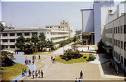
In 1949, under Japan's new educational systems, the university was merged with Hyogo Normal School, Hyogo Junior Normal School, Kobe Technical College and Himeji High School, all of which were in Hyōgo Prefecture, leading to the creation of Kobe University..jpg)
From this period, the university has been expanded and has created new faculties to complement its main academic foundations, which is economics and commerce.
Academics
Graduate Schools

Graduate School of Humanities
Graduate School of Intercultural Studies
Graduate School of Human Development and Environment
Graduate School of Law
Tier 1 full time Law school
Graduate School of Economics
The Okishio Theorem (Nobuo Okishio) is well known and appreciated worldwide
Graduate School of Business Administration
Tier 1 full time MBA school
Graduate School of Science
Graduate School of Medicine
Graduate School of Health Sciences
Graduate School of Engineering
Graduate School of Agricultural Science
Graduate School of Maritime Sciences
Graduate School of International Cooperation Studies
Faculties
Faculty of Letters
Faculty of Intercultural Studies
Faculty of Human Development
Faculty of Law
Faculty of Economics
Faculty of Business Administration
Faculty of Science
School of Medicine (Faculty of Medicine and Faculty of Health Sciences)
Faculty of Engineering
Faculty of Agriculture
Faculty of Maritime Sciences

Kobe University ranked 197 in the 2007 THES-QS World University Ranking
Kobe University ranked 199th in the 2008 THES-QS World University Ranking




 He donated some of his fortune for the establishment of an “industrial school”. Chalmers was run as a private institution until 1937, when the institute became a state owned university. In 1994, the school once again became a private institution, owned by a foundation. Chalmers is the only university in Sweden named after a person.



